Buying a Home in Castle Rock, CO: Prices, Neighborhoods and How to Offer by Property Type
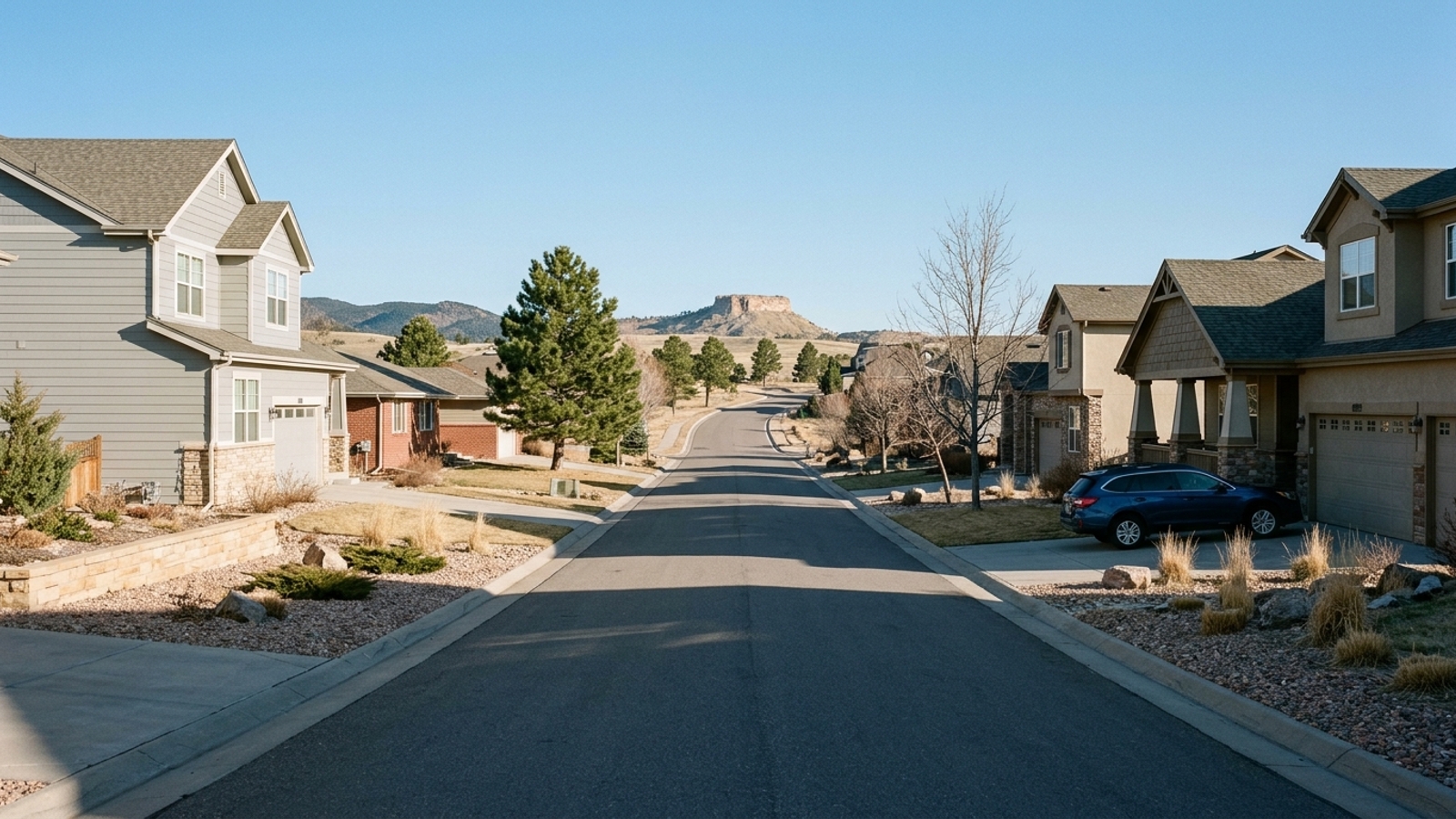
The median home price in Castle Rock, CO is around $644,693, with values remaining roughly flat compared to last year. What you’ll find here is a mix of older downtown properties, master-planned developments, and brand-new subdivisions still expanding toward the town’s outer limits.
The property type you choose determines your negotiating position and what your carrying costs look like after closing. In Castle Rock, condo buyers typically discover their negotiating room at closing, while townhouse buyers find out at the offer stage.
Key Takeaway
If you want the most space for your money, start with single-family homes. In Castle Rock, they cost less per square foot than townhouses or condos and usually sell a little under asking. If you’re shopping at the lower end of the market, condos give you the most room to negotiate. Townhouses are the tightest segment, with the highest share of above-list sales in the 90 days ending September 30, 2026.
Who This Guide Is For
You’re planning to buy a home in Castle Rock and need to decide which property type fits your budget and how hard you can negotiate on it.
Castle Rock Home Prices by Property Type
The property type you choose sets how hard you can negotiate. Condos are currently a buyer’s market, with roughly 7 months of supply and no recent sales closing above list price. Townhouses are the tightest segment, with 21.8% selling above list. Single-family homes give you the most space per dollar at about $199 a square foot, compared to $229 for townhouses and $239 for condos, and they typically close at about 1% under list.
A strategy that works for a detached property won’t necessarily secure a townhouse. Inventory in that segment sits around 3.9 months of supply, and sellers hold real control over the final price.
Single-Family Homes
Detached houses carry the highest sticker price, with a median sale price around $684,727 in the 90 days ending September 30, 2026. Despite the higher entry point, they offer the most house per dollar. A detached house here costs less per square foot than either a condo or a townhouse.
Prices in this segment rose 3.1% year over year, which shows steady demand. The high entry price is the obvious downside, and because values are still climbing, waiting in hopes of a better deal isn’t a reliable plan.
Townhouses
Townhouses are the middle-priced option, with a median sale price of roughly $495,006. This is the segment where sellers hold the cards. They sat on the market longer than any other type recently, yet they sold closer to asking than any other type, at 99.6% of list price.
Plan to offer at or near asking and have your financing ready before you tour. What you give up is negotiating room, and HOA dues add a monthly cost on top of the mortgage. Ask the HOA for current dues and any planned special assessments before you submit an offer.
Condos
Condos offer the lowest entry price and the most buyer-friendly conditions. The median sale price sits around $349,964, though that figure is based on just 18 condo sales over the last quarter, so treat it as a general direction rather than a firm trend. Not one of those 18 sales closed above asking price.
That gives you room to ask for concessions or a price cut. The catch is that you pay the most per square foot of any type. The same buyer-friendly supply that helps you negotiate now will work against you when you go to resell, and lenders may limit your options if the complex isn’t on the HUD FHA condo approval list.
How to Narrow Your Castle Rock Home Search
Figuring out where to start depends on your budget and your tolerance for competition. Does your budget reach detached-home prices? If yes, read the single-family homes section first. If not, compare townhouses and condos against your monthly payment limits.
You should also think about whether you need to negotiate below asking or can afford to pay close to list to win the home. Condos are the segment where the data supports asking for concessions; the sale-to-list data in the offer section shows where each property type lands. If you can pay list, townhouses stay on the table.
Next, consider what kind of community you want. Do you prefer an established neighborhood or new construction? The section below on established neighborhoods versus new construction lays out the trade-offs. Then look at your total carrying costs: can your monthly budget absorb HOA dues and a metro district mill levy on top of the mortgage? Review the costs section before you set a firm price ceiling.
Castle Rock Housing Market Outlook
The overall market in Castle Rock currently sits at about 4.1 months of supply, with roughly 485 active listings in the 90 days ending September 30, 2026. That puts the broad market close to balanced, giving you a reasonable amount of choice and time to complete inspections. The town-wide headline numbers, though, mask the tight competition in the townhouse segment and the surplus in the condo market.
The split by property type matters far more for your daily search than the town-wide average. Watch whether new listings in your specific price band are rising or falling month to month. The at-a-glance section below has the full figures across all housing types.
Established Neighborhoods vs New Construction in Castle Rock
Buyers in Castle Rock can choose between older, established subdivisions with mature trees and brand-new communities still in the early phases of development. The trade-off often comes down to predictability versus modern finishes. Established areas have known HOA histories and set metro district tax burdens, while newer builds involve evolving district debt and ongoing construction phases.
School assignments vary by address across all of these areas. Check the Douglas County School District locator rather than relying on what a listing claims.
The Meadows
The Meadows is an established master-planned community and a common starting point for buyers who want a built-out neighborhood. The Town of Castle Rock maintains 136 miles of trails, 62 well-planned parks, and more than 6,900 acres of open space town-wide, and residents here have easy access to many of those outdoor amenities. You can review current listings in The Meadows to see the range of available home styles.
Many homes here sit inside metropolitan districts. Ask the seller or title company for the metro district’s current mill levy and outstanding bond debt before you finalize your numbers, since it raises the tax bill.
Dawson Trails
Dawson Trails is a master-planned community approved by the Town of Castle Rock covering roughly 2,200 acres southwest of town near the Crystal Valley Interchange. The development plan allows for 5,850 housing units, so there’s a substantial pipeline of new-construction options. Know the long-term plan for the area, not just what the model home looks like today.
What you give up is immediate peace and quiet. Construction will continue around you for years. New metro districts often carry the highest debt service, so ask the builder for the district’s disclosure and the mill levy cap before you sign anything.
Crystal Valley Ranch
Crystal Valley Ranch is a newer master-planned area where daily access is rapidly changing. The I-25 and Crystal Valley interchange project is currently adding a new bridge over the highway, reconstructed frontage roads, and a roundabout. Northbound I-25 ramps are already open to traffic, and the total project is anticipated to finish in 2027, which will alter the daily commute for residents.
Hilly lots and ongoing building phases vary block to block. Drive your commute route at rush hour, and review the HOA and metro district documents before you commit.
Downtown Castle Rock
Downtown Castle Rock is the most walkable option in the area. Buyers looking here will find older homes and smaller attached housing options situated near local shops and events.
Detached inventory is limited and older homes may need updates. Budget for a thorough inspection, and ask about any HOA rules on attached units.
Costs to Budget for Beyond the Purchase Price
The purchase price is only one part of your monthly housing expense in Colorado. Property taxes, municipal utility rates, and community fees all affect what you can actually afford each month.
Many of these carrying costs are localized. A house on one side of town could cost significantly more per month than a similar house a few miles away. Turn every unknown into a confirmed number before you finalize your budget.
Property Taxes and Metro Districts
Colorado taxes residential property by multiplying the home’s assessed value by the local assessment rate and the combined mill levy. For tax year 2026, the Douglas County Assessor projects the residential assessment rate at 7.05% for school districts and 6.8% for all other local governments, with a 10% legislative adjustment off the first $700,000 of actual value.
A metro district line on the tax bill is a major factor in newer Castle Rock subdivisions, and individual metropolitan districts carry widely varying mill levies. Villages at Castle Rock Metro District 9 has a mill levy maximum of 69.000 mills, while Promenade at Castle Rock Metro District 3 has a maximum of 57.000 mills. Two similar homes can carry very different tax bills because of these levies. Look up the property’s districts and ask for the prior year’s tax bill.
HOA Dues
Most townhouses and condos, along with many single-family subdivisions in Castle Rock, have a Homeowners Association. These dues change the real monthly cost of owning the home, particularly in the townhouse and condo segments where exterior maintenance is often covered.
No reliable range exists across the entire town. Ask the HOA for current dues, the reserve study, and any pending special assessments.
Water Costs
Castle Rock runs its own water utility, and rates are going up. The Town Council approved 2027 rate increases that push the projected annual water bill for an average residential customer to $1,647. Buyers of new construction also face strict landscaping rules: an ordinance requires no turf in front yards, allowing ColoradoScape design only, and limits backyard turf to less than 500 square feet for all new single-family homes.
Ask the seller for 12 months of water bills. Irrigation can swing summer costs widely.
Closing Costs
Closing costs vary by loan product and the title company you select, covering everything from the appraisal and origination charges to title insurance and recording fees. The Loan Estimate is the standard document you’ll use to compare these charges across lenders.
Don’t rely on a rule-of-thumb percentage. Get a Loan Estimate from each lender and a fee sheet from the title company to compare costs accurately.
How to Buy a Home in Castle Rock Step by Step
Buying a house in this market means matching your financing and negotiation tactics to the specific property segment you’re targeting. From securing the right pre-approval to scheduling local inspections, every step ties directly to conditions in Castle Rock.
Always confirm loan, legal, and tax specifics with a lender, attorney, or tax professional. This guide is not financial advice. Once your team is in place, you can move through the transaction with a clear sense of what’s coming.
Get Pre-Approved for the Property Type You Want
Pre-approval requirements differ by property type. If you’re targeting condos, check whether the complex is on the HUD FHA condo approval list before you fall for a specific unit. Lenders have strict requirements regarding the financial health and owner-occupancy ratios of condominium associations.
A pre-approval for a house does not guarantee financing for a condo in a non-approved complex. Ask your lender about property-specific restrictions before you tour.
Make an Offer Based on Sale-to-List Data
On a hypothetical $650,000 single-family listing, the 98.8% median sale-to-list ratio implies a sale around $642,200, which is about $7,800 under asking. The typical Castle Rock house sells for a little more than 1% under its asking price, though roughly 11.6% of single-family homes still sold above list. In the townhouse segment, that above-list share was 21.8% across 33 sales; in the condo segment, zero of 18 recent sales did.
If you need help negotiating offers by property type, Jim Garcia at RE/MAX Professionals can guide you through the pricing data. The median is not a promise. The best-priced homes still draw over-asking offers, so check how long a specific listing has been sitting before you decide how far below list to go.
Schedule Radon and Soils Inspections
Two common inspection items for Colorado buyers are radon testing and evaluations for expansive soils that can affect foundations and driveways. Because of the local geology, checking for soil movement and testing indoor air quality are standard parts of the due diligence process here.
A standard inspection may not include a radon test or a structural look at the foundation. Ask your inspector what’s covered and add those checks if they’re not.
Review the Title Commitment and HOA Documents
The title commitment shows all recorded metro district details and HOA covenants tied to the property. The HOA documents will show current dues, community rules, and the health of the reserve fund. Read these thoroughly within your contract’s objection deadlines.
If you want help walking through those deadlines, Jim Garcia at RE/MAX Professionals is available to assist. Contract deadlines on Colorado’s standard forms are short and binding. Put each objection date on your calendar the day you go under contract.
At a Glance
- All homes: median sale price $644,693, up 0.6% year over year (90 days ending 2026-09-30)
- All homes: 366 sold, median 42 days on market, 4.1 months of supply, 485 active listings (90 days ending 2026-09-30)
- All homes: median $204 per square foot, sold at 98.9% of list price, 11.9% sold above list (90 days ending 2026-09-30)
- Single-family: median sale price $684,727, up 3.1% year over year; $199 per square foot; 315 sold (90 days ending 2026-09-30)
- Single-family: 98.8% sale-to-list, 11.6% sold above list, median 42 days on market, 3.9 months of supply, 403 active listings (90 days ending 2026-09-30)
- Townhouse: median sale price $495,006, up 1.5% year over year; $229 per square foot; 33 sold (90 days ending 2026-09-30)
- Townhouse: 99.6% sale-to-list, 21.8% sold above list, median 46 days on market, 3.9 months of supply, 41 active listings (90 days ending 2026-09-30)
- Condo (based on 18 condo sales, so treat with caution): median sale price $349,964, down 1.4% year over year; $239 per square foot (90 days ending 2026-09-30)
- Condo (based on 18 condo sales): 98.9% sale-to-list, 0% sold above list, median 32 days on market, 7 months of supply, 42 active listings (90 days ending 2026-09-30)
Buying a Home in Castle Rock FAQs
Is Castle Rock, Colorado Expensive?
The median sale price for all homes in Castle Rock is $644,693, which is up 0.6% year over year for the 90 days ending September 30, 2026. This is higher than the statewide median sale price of $540,000 and the Denver metro median of $565,000 reported by the Colorado Association of REALTORS for September 2026. Because overall prices are roughly flat, your exact costs will depend heavily on the property type you choose.
Is Castle Rock a Wealthy Area?
Home values in Castle Rock sit at a median of $204 per square foot across all property types for the 90 days ending September 30, 2026. These values vary widely depending on the property type you’re buying. Review the at-a-glance list above for a detailed breakdown of current pricing by housing style.
What Is the 3-3-3 Rule for Buying a House?
The 3-3-3 rule is an informal personal-finance guideline suggesting you buy a home priced no more than three times your annual income, put down at least three percent, and keep monthly housing costs under 30% of your gross income. For a hypothetical $650,000 Castle Rock home, this rule would require a substantial income to stay within the 30% threshold. Always confirm your personal affordability limits with a qualified lender rather than relying on general guidelines.
Is Castle Rock a Good Place to Buy an Investment Property?
The Town of Castle Rock does not regulate short-term rentals like Airbnb or VRBO, though you must obtain a business license and collect applicable lodging and sales taxes. If you’re looking at condos, the median price fell 1.4% year over year based on 18 recent sales, offering a lower entry point. Pull rental comps for the specific property to determine potential cash flow. This is not financial advice.
What’s It Like Living in Castle Rock, CO?
Castle Rock offers a mix of historic downtown charm and large-scale outdoor recreation, with easy access to major highways. Since the experience varies by neighborhood, drive I-25 at commute hours and spend a weekend downtown before you choose an area. For more details on the local lifestyle, read this guide to relocating to Castle Rock.
Is Castle Rock in Douglas County?
Yes, Castle Rock is located in Douglas County and serves as its historic county seat. The Town’s council-manager government operates within the county framework. Property taxes here are assessed by the Douglas County Assessor, which affects your total carrying costs.
How Far Is Castle Rock From Denver and Colorado Springs?
Castle Rock sits between Denver to the north and Colorado Springs to the south along the I-25 corridor. Drive times vary significantly depending on traffic and the time of day. Drive your anticipated commute route at rush hour to get an accurate feel for the distance.
Is Castle Rock, Colorado Safe?
The Town of Castle Rock publishes official monthly crime statistics reports through the Castle Rock Police Department, detailing offenses and Priority 1 calls for service. To make sense of those figures, compare the rates per 1,000 residents across several years rather than looking at raw counts. Check the agency’s data for the specific area you’re considering before making a decision.
Related guides: Selling a home in Castle Rock, Best real estate agent in Castle Rock, Pros and cons of living in Castle Rock, Choose a buyer’s agent in Castle Rock, Castle Rock, CO ZIP codes.
Sources
- Redfin: Data Center
- Douglas County Assessor: Residential Property Tax Calculations
- Douglas County: 2025 Mill Levy Certification Budget
- Denver Gazette: Castle Rock Approves Water Rate Increase
- Town of Castle Rock: May 2025 Monthly Report
- Town of Castle Rock: FAQ
- Douglas County: Other Governments in Douglas County
- Yahoo Finance: Buying House Using 3-3-3 Rule
- Town of Castle Rock: About Castle Rock
- CDOT: I-25 Crystal Valley
- Town of Castle Rock: Archive ViewFile
- Colorado Association of REALTORS: Colorado Home Sales Slide in September